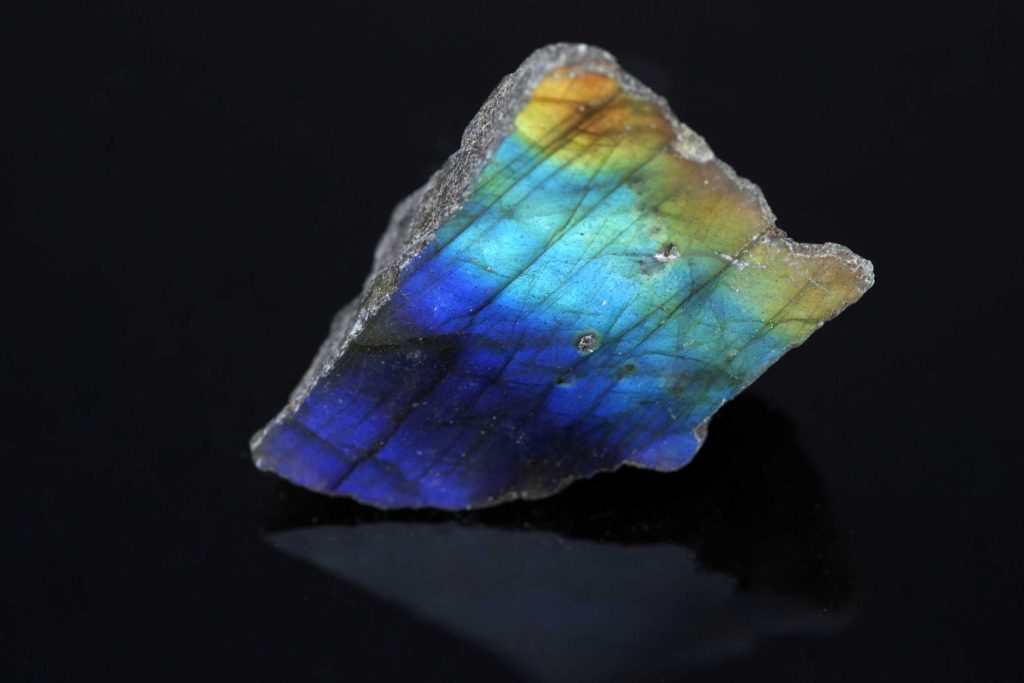
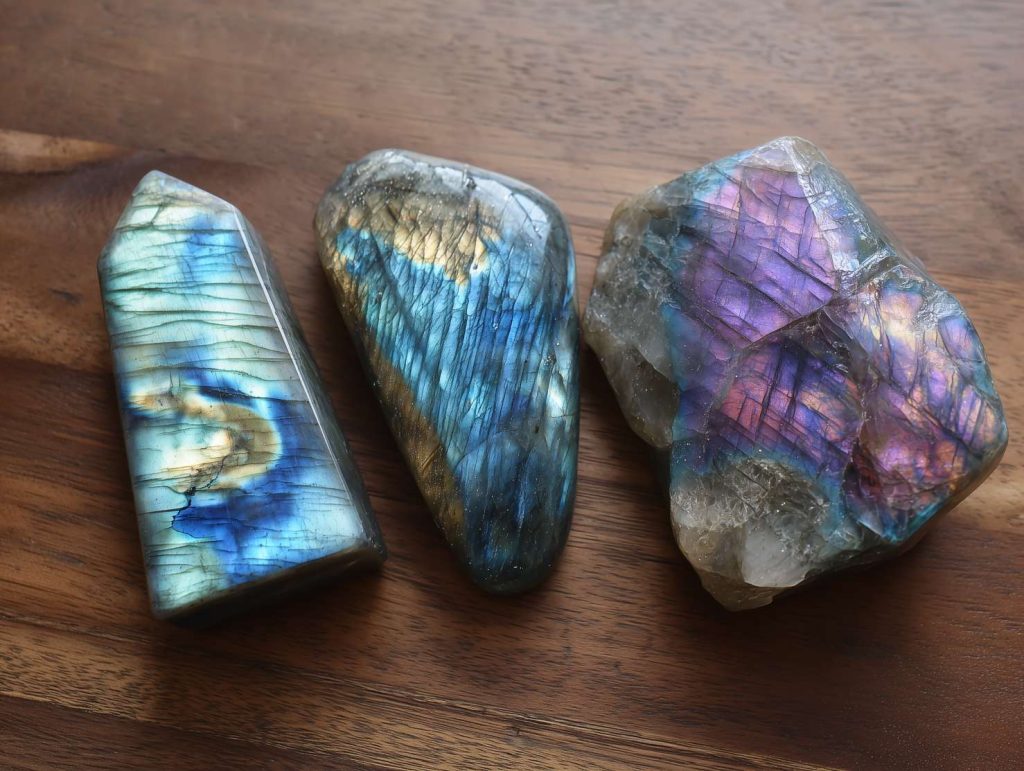
Do you recall the moment you first examined a gray stone under sunlight, only to see it reveal a hidden burst of neon blue or gold? That visual shift is the signature of the labradorite crystal. The scientific term for this optical phenomenon is labradorescence, and it forms the core of the labradorite meaning.
Often called the Stone of Transformation, this mineral holds a reputation for containing hidden light. It reminds us that even when things appear dull or dark on the surface, there is often beauty waiting to emerge. People navigating major life changes—like career pivots or spiritual awakenings—often choose labradorite as a guide.
This guide explains why feldspar minerals create such fascination, how to decode the different color flashes, and what makes a premium labradorite stone valuable for your collection.
What is the Spiritual Meaning of Labradorite?
At its core, this is a stone for the mystic. While clear quartz acts like a spotlight, Labradorite is said to contain the Northern Lights (Aurora Borealis) trapped within the rock. According to Inuit legend, a warrior once struck the rocky coast of Labrador, Canada, with his spear. This blow freed many of the lights into the sky, but some remained trapped in the stone, creating the gem we know today.
This connection between the mundane rock and the magical flash creates the foundation of the stone’s symbolism:
- Protection: It is widely used to create a shield against negativity, often referred to as an “aura shield.”
- Intuition: It encourages trusting your gut feelings when logic doesn’t quite add up.
The stone functions as a protective companion for those chasing dreams. It is a favorite for “dreamers and doers” alike.
The Magic of the Flash: Labradorescence Explained
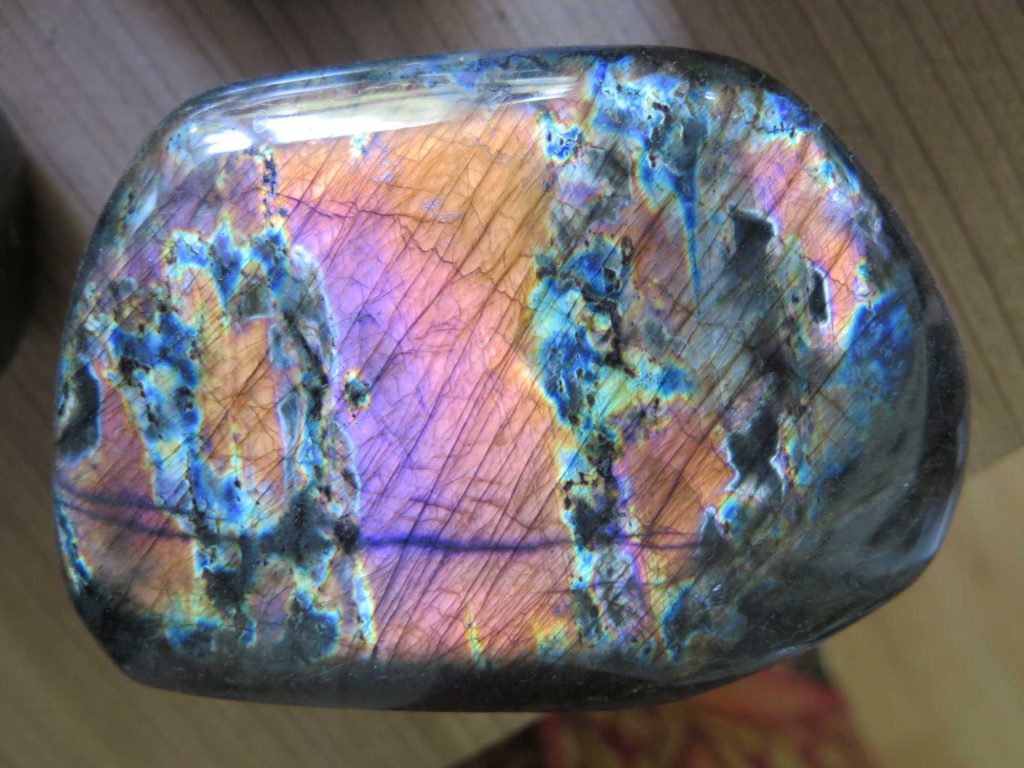
Unlike Amethyst or Rose Quartz, which get their color from pigments, labradorite stone relies on light interference. This specific effect is known to geologists as labradorescence.
Geologically, this occurs because the stone is composed of thin, alternating layers of feldspar minerals. When light enters these layers, it bounces back and forth, creating interference patterns that manifest as the blues, greens, and golds we see. According to Geology.com, if these layers are too thick or too thin, the “schiller” effect won’t happen, leaving the stone looking plainly gray.
Why does this matter for the meaning?
The geology serves as a metaphor for resilience. The magic isn’t always on the surface; you often need to shift your perspective (or the lighting) to see the brilliance. Many people wear labradorite benefits on their left wrist to remind themselves to seek the light during dark times.
Decoding the Colors: Blue vs. Gold vs. Purple
Not all flash is created equal. While the general benefits apply to all variations, crystal enthusiasts often link specific flash colors to distinct energies.
- Electric Blue Flash: Linked to the Throat Chakra and Third Eye, this color supports honest communication and trusting your intuition.
- Gold or Yellow Flash: This warmer tone is associated with the Solar Plexus Chakra. It symbolizes personal power, confidence, and the will to get things done—similar to crystals for focus.
- Purple or “Sunset” Flash: High-grade stones displaying purple or pink flashes are rare and sometimes called “Sunset Labradorite.” These are often reserved for deep meditation practices.
How to Spot Quality Labradorite
When shopping for jewelry, look beyond the gray base. A low-grade stone appears muddy, dark, or mostly gray with very little flash. A high-quality gem should come alive with movement.
The “Angle Test” for Buyers
If you are buying online, look for videos or photos that show the stone from multiple angles. Be cautious if a seller only provides a single, flat, front-facing photo, as the flash might be edited. Real labradorescence requires the Angle Test—tilting the stone to catch the light.
- Transparency: High-grade gems are often semi-translucent, allowing some light to pass through the structure.
- Full Flash: The most desirable beads or cabochons have a “full flash,” where the color covers the entire face of the stone rather than just a small corner.
Bringing the Meaning into Daily Life
Wearing this stone is a great way to keep its energy close. Physically, it is relatively durable for daily wear, with a Mohs hardness rating of 6 to 6.5 (Gem Society). However, the internal layers that produce the flash can be prone to cleavage if struck hard.
Treat it with care: avoid banging it against hard surfaces and remove it before heavy work. Whether used as a protective tool against workplace stress or for creative inspiration, the magic of Labradorite is always there. You just have to find the right light to let it shine.
Frequently Asked Questions
What is the Labradorite crystal good for?
It is widely regarded as a stone of transformation and protection. Many enthusiasts wear it to shield their energy from negativity and to boost their intuition during times of change or stress.
Which chakra is Labradorite associated with?
It is primarily linked to the Throat Chakra (for truth) and the Third Eye Chakra (for intuition). However, varieties with a strong gold flash also resonate with the Solar Plexus, aiding willpower.
Why does my Labradorite look gray or dark?
Gray is the natural base color of the mineral. The vibrant colors (labradorescence) are an optical effect that only appears when light hits the internal layers at specific angles. If a stone never flashes, it may be of lower quality.
Can Labradorite go in water?
Brief exposure to water is usually fine, but it is best to keep it dry to preserve the stone’s finish. Prolonged soaking can damage the delicate feldspar layers that create the flash, potentially dulling the visual effect over time.