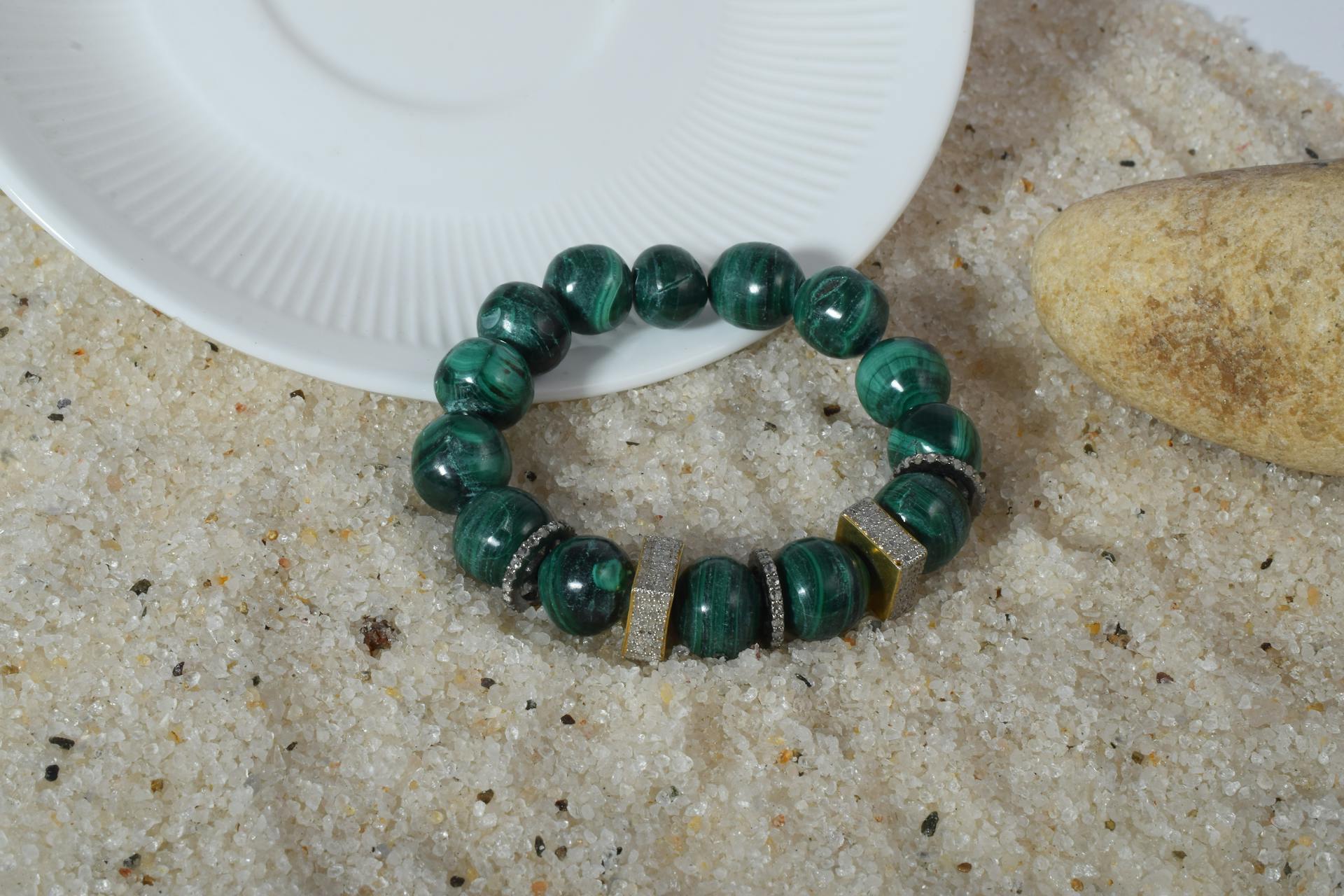
We have all been there. You are scrolling through an online shop, and you see a vibrant green bracelet labeled as malachite. The price is surprisingly low, yet those striped designs look just a little too uniform. Is it an authentic deal, or is it just a piece of painted plastic?
The market is currently flooded with fake malachite products because the mineral has become harder to obtain through mining operations. Buying a counterfeit means missing out on the distinct weight, cool touch, and historical value of the genuine stone. If you want to experience the meaning of malachite—often called the “stone of transformation”—you need an actual natural earth sample, not a resin block.
Here is how to play detective and spot a fake malachite stone in seconds.
The Dead Giveaway: Black vs. Dark Green
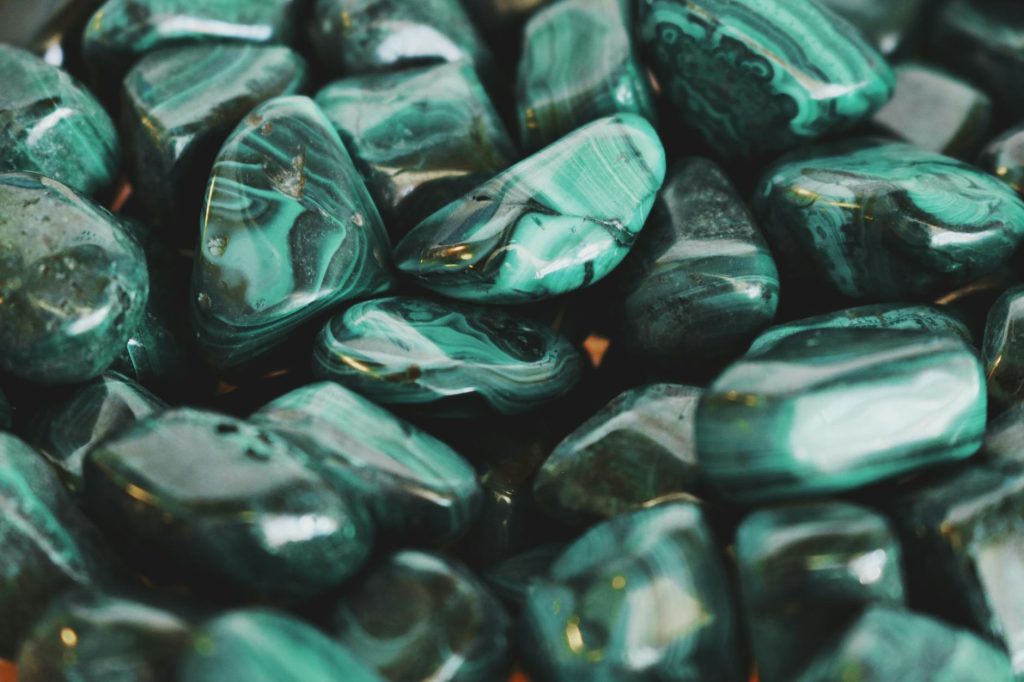
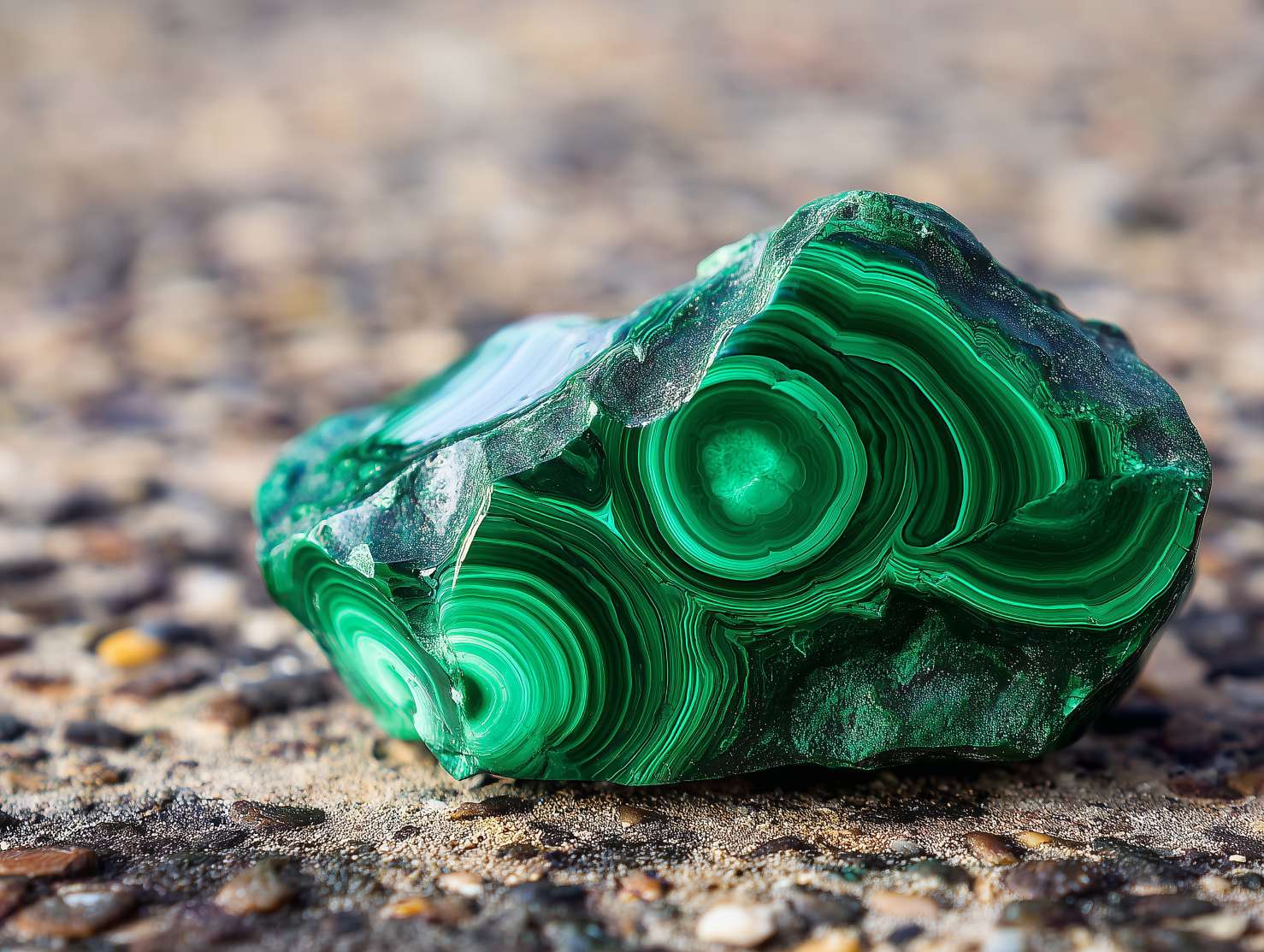
This is the single easiest way to spot a fake. In nature, malachite is a copper carbonate hydroxide mineral. It forms in layers of varying shades of green, ranging from pale pastel to deep emerald.
The Golden Rule: Authentic malachite does not have true black stripes.
If you look closely at a real stone, the darkest bands are actually a very deep forest green. They might appear black at a distance, but under direct light, the green hue becomes visible. Synthetic imitations made from polymer clay often achieve contrast by using stark black dye. If you see jet-black, flat striping, you should walk away.
Pattern Complexity: Swirls vs. Blocks
Nature is messy. A real malachite crystal develops its structure through botryoidal growth, which produces grape-like or bubble-shaped formations. Once cut and polished, the material reveals concentric circles, irregular swirls, and organic flowing lines.
The Fake Look:
- Blocky or chunky: Fakes often look like blocks of clay mashed together.
- Uniform stripes: If the bracelet beads all have perfectly straight, parallel lines, it is likely synthetic.
Real malachite displays its natural beauty through unpredictable patterns. One bead might show a “bullseye” circle, while the next displays silky fibrous bands. It is chaotic art, not a uniform print.
The Temperature Test
Gemstones are excellent thermal conductors. They extract heat from your skin, which makes them feel cold to the touch initially.
Grab the stone. It should feel cold, similar to glass or marble, assuming it has been sitting at room temperature. It will take a minute or so to warm up in your hand.
Fake materials made from plastic or resin create an immediate room-temperature effect. The moment you touch them, they feel “warm” or neutral, lacking that initial icy shock typical of real stone.
The Weight Check
Malachite has a high copper content, making it a heavy mineral. Therefore, a genuine malachite stone feels much heavier than it looks. It has a significantly higher specific gravity (around 3.6 to 4.0) compared to glass or plastic.
A bracelet that weighs as little as a plastic toy consists of synthetic materials. Real stones have a satisfying, dense heft to them.
Common Types of Fakes
It helps to know what you are up against. Here are the usual suspects regarding Common Types of Fakes found in markets:
- Polymer Clay: Artists stack green and black clay into a log shape and slice it. The surface looks flat and matte, lacking the silky luster of real stone.
- Dyed Glass: Some sellers use heavy glass dyed green. It will be cold and heavy (like real stone) but will lack the intricate natural banding patterns.
- Resin/Plastic: This is lightweight and often features uniform, painted-on designs.
Why Does It Matter?
Acquiring the real deal safeguards your money and ensures you own a product of quality. The gem stands out because of its distinctive weight, its ability to stay cool, and its captivating disordered designs. Whether you are using it for home decor or exploring crystal meanings, the authenticity of the piece serves as the foundation for your experience.
Quick Summary Checklist
Next time you are shopping, run through this list before you buy. If you are new to collecting, you might also check a beginner guide to familiarizing yourself with stone properties.
- Color Check: Are the stripes deep green (Real) or jet black (Fake)?
- Pattern Check: Is the design organic and swirling (Real) or blocky and uniform (Fake)?
- Price Check: Is it $5 for a massive slab? Real malachite is a mid-range semi-precious stone, not a bargain-bin item.
Trust your eyes and your hands. A “perfect” appearance usually suggests something deceptive.
Frequently Asked Questions
How can you tell if malachite is real or fake?
Look at the colors first. Real malachite features banding in varying shades of deep green, never true black. Additionally, real malachite feels dense and cold to the touch, while fakes often feel light and warm like plastic.
Is fake malachite toxic to wear?
Generally, no. Fake malachite is usually made of inert plastic, resin, or polymer clay, which is safe to wear. However, authentic malachite dust (created during sanding or breaking) can be toxic if inhaled due to its high copper content, so handle raw specimens with care.
Does real malachite break easily?
Yes, it can. Malachite is a relatively soft stone with a Mohs hardness of 3.5 to 4. It can scratch or crack if dropped on a hard surface, whereas plastic fakes might just bounce without damage.
Why is real malachite expensive?
Authentic malachite is a copper-rich mineral that is becoming harder to source, with major deposits in the Congo and Russia being worked extensively. Its density and the need for careful lapidary work to avoid toxicity during cutting also add to the final cost.